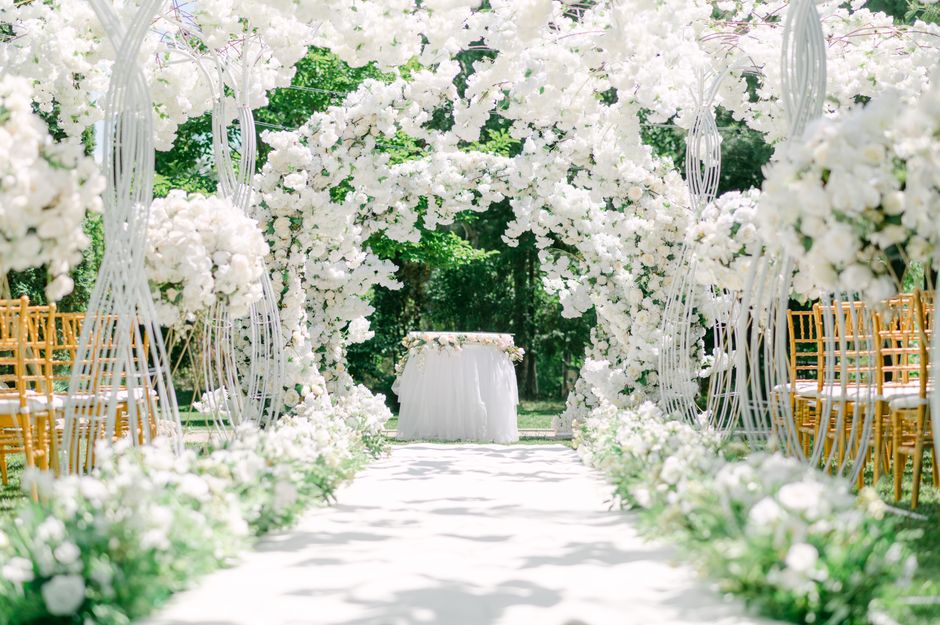
Foam-Free Wedding Installations: Professional Methods
Foam-free wedding installations are no longer a niche choice for stylists who like a challenge. They are fast becoming the professional standard for couples who want beautiful flowers, cleaner working methods, and arrangements that hold up properly on the day. If you are planning a ceremony arch, table meadow, urn display, staircase garland, or hanging feature, understanding Foam-Free Wedding Installations: Professional Methods will help you make better decisions and avoid a lot of last-minute stress. Truth be told, the best wedding flowers are rarely the ones that just look pretty in a mock-up; they are the ones that arrive, stay stable, and still look fresh when the speeches begin.
This guide explains how foam-free structures work, why they matter, what professional florists actually do differently, and where the common pitfalls sit. It is written to help couples, planners, venue teams, and florists make practical choices with confidence. If you are also looking into the logistics around delivery and handling, it can be useful to understand the basics of flower delivery and timing expectations and how aftercare ties into proper flower care.
Contents
- Why Foam-Free Wedding Installations Matter
- How Foam-Free Wedding Installations Work
- Key Benefits and Practical Advantages
- Who This Is For and When It Makes Sense
- Step-by-Step Guidance
- Expert Tips for Better Results
- Common Mistakes to Avoid
- Tools, Resources and Recommendations
- Law, Compliance, Standards, or Best Practice
- Options, Methods, or Comparison Table
- Case Study or Real-World Example
- Practical Checklist
- Conclusion
- Frequently Asked Questions
Why Foam-Free Wedding Installations Matter
Foam-free installation methods matter because they solve a real problem: how do you build large, secure, refined floral designs without relying on floral foam? In practice, foam is often used because it is quick and familiar, but it is not always the best fit for modern wedding work. Couples are increasingly asking for more sustainable methods, venues are more sensitive about waste, and professional florists want systems that are safer to transport and easier to adapt on site.
There is also the visual side. Foam-free construction often produces looser, more natural designs with better stem movement and a softer, garden-style finish. That can be exactly what a wedding space needs. You will see this especially in modern venues, barns, orangery settings, and marquee receptions where the flowers need to feel airy rather than boxed in.
To be fair, foam-free does not automatically mean easier. It means more considered. The structure has to do the heavy lifting. The water source, the mechanics, the frame, the stem choice, the working time - all of it matters. A good foam-free design looks effortless because a lot of effort went into it beforehand. That is the bit people do not always see.
Expert takeaway: foam-free wedding work is not just a sustainability preference; it is a precision method that depends on planning, structure, and floral selection. When done well, it can be more reliable than foam because the design is built around physics, not habit.
How Foam-Free Wedding Installations Work
Foam-free installations work by replacing disposable floral foam with reusable or lower-waste mechanics that hold stems securely and provide water where needed. The method depends on the design. A tall urn arrangement, for example, may use chicken wire, a pin holder, and a water source inside the vessel. A meadow runner may rely on taped grids, reusable cages, or a hidden tray system. A ceremony arch might use clamped mechanics, pre-built flower panels, or containers secured to the frame.
The professional principle is simple: the flowers should be supported without crushing the stem ends or blocking their ability to drink. That means the florist has to think in layers. First comes the structure. Then comes balance. Then comes hydration. Then comes the final visual composition. If one of those stages is rushed, the whole thing can wobble - sometimes literally.
In a wedding setting, this usually begins with the venue shape and the placement plan. A florist will consider where guests sit, where photographs will be taken, how much time is available on site, and whether the design must be pre-built or installed in sections. It sounds obvious, but it is often the difference between a smooth install and an awkward scramble in the corridor at 8:15 a.m.
Common foam-free mechanics used by professionals
- Chicken wire: shaped inside vessels or frames to support stems while keeping the arrangement breathable.
- Pin holders: good for low arrangements and compact designs where stability is essential.
- Reusable containers and water tubes: helpful for individual stems, fragile blooms, and modular structures.
- Reinforced grids and tape structures: useful for table flowers and neat modern lines.
- Clamps, ties, and bespoke frames: used for arches, hanging pieces, and larger installations.
The most effective foam-free designs are usually built in a workshop, then refined on site. That reduces pressure on the venue team and gives the florist more control over the finish. It also makes transport safer, which is not glamorous, but very real.
Key Benefits and Practical Advantages
The appeal of foam-free wedding installations is bigger than one trend cycle. There are practical reasons professionals continue to adopt these methods, and most of them show up in day-to-day work.
- Better sustainability profile: fewer single-use materials and more reusable mechanics.
- Cleaner presentation: no hidden foam edges, crumbling residue, or awkward exposed blocks.
- More natural styling: stems can move more freely, which suits garden-inspired and romantic designs.
- Improved adaptability: foam-free structures can often be adjusted more easily if the venue plan changes.
- Better venue alignment: some locations prefer or request lower-waste floral methods.
- Potentially stronger hydration control: depending on the method, flowers can sit in proper water sources rather than relying on saturated foam alone.
There is also a brand benefit for florists and planners. Foam-free work signals craft. It shows you have thought about structure, lifespan, and finish, not just volume. Couples may not use those words, of course. They usually say something simpler like, "It looked more elegant than we expected." Which, to be honest, is the nicest kind of compliment.
If sustainability matters to your team or your venue, it may also be worth reviewing the wider ethos behind sustainable practices so that your floral choices feel consistent across the event rather than piecemeal.
Who This Is For and When It Makes Sense
Foam-free wedding installations make sense for a wide range of events, but they are especially useful where design quality, environmental considerations, or venue logistics are front and centre.
Best suited to:
- Couples planning weddings with a natural, organic, or luxury editorial feel
- Venues that discourage single-use floral foam or prefer cleaner working methods
- Planners who need installations to be modular, transportable, or partially pre-built
- Florists aiming to improve their sustainable credentials without losing design control
- Large weddings where multiple focal points must feel cohesive
- Smaller weddings where one or two statement pieces need to do a lot of visual work
It is not just for rustic or countryside weddings, by the way. Foam-free techniques can look incredibly polished in city venues, hotels, galleries, and contemporary spaces. Picture a white staircase with airy roses and trailing clematis, or a long dining table with low, sculptural floral meadows. Same method, very different mood.
It may be less suitable if the brief demands ultra-dense, rigid, highly symmetrical shapes with very little movement and a short prep window. That does not mean impossible. It means the florist has to be more selective about technique and stem choice. A good professional will say so early. That honesty saves everyone a headache later.
Step-by-Step Guidance
If you want a foam-free installation to succeed, you need a process. Not guesswork. Not "we'll sort it on the morning." Here is how professionals typically approach it.
1. Define the design intent
Start with the look and the purpose. Is the installation a ceremony feature, a photo backdrop, a guest-table centrepiece, or a multi-use design that must work again during the reception? The answer changes the mechanics, the size, and the choice of flowers.
2. Measure the venue properly
Walls, ceiling heights, doorway widths, table dimensions, and access routes all matter. A design that is beautiful on paper can become awkward if it will not fit through the service entrance. This is one of those details that sounds boring until it ruins the day. So measure twice, then check once more.
3. Choose the structure first
In foam-free work, the container or frame is not an afterthought. It is the backbone. Select a vessel, armature, arch frame, hanging rig, or table support system that suits the scale of the arrangement and the weight of the materials.
4. Plan hydration
Fresh flowers need a proper water strategy. That might be a concealed vessel, a water-filled base, soaked moss alternatives where appropriate, or individual tubes. Whatever the method, the goal is the same: keep stems hydrated for the time they need to look their best.
5. Group flowers by stem strength
Some stems are strong and structural. Others are delicate and delicate. Use the stronger ones to form the skeleton of the design and add softer blooms once the shape is stable. Roses, hydrangea, lisianthus, tulips, ranunculus, delphinium, and seasonal foliage all behave differently. A professional knows this instinctively, but it still helps to plan on paper.
6. Build in sections
Large installations are often assembled in modules. This allows transport, safer lifting, and quicker on-site finishing. A ceremony arch, for example, may be pre-built in left and right sections before the final balance is adjusted at the venue.
7. Finish on site with the eye, not just the hand
The last 10 percent is usually what makes the design feel expensive. Adjust angles. Hide mechanics. Lift a bloom slightly. Tuck in a stem. Step back. Then step back again. If the arrangement looks good from three angles and not just one, you are nearly there.
Expert Tips for Better Results
Here are a few practical things professionals tend to prioritise, especially on wedding day where time is tight and pressure is high.
- Use more structural foliage than you think: it gives shape and keeps the design from looking patchy.
- Choose flowers with reliable heads: blooms that collapse quickly can create more work than they save.
- Keep the palette disciplined: foam-free designs often look best when the colour story is clear and limited.
- Pre-condition flowers carefully: well-hydrated stems handle transport and install far better.
- Work with the venue light: some designs look flat in harsh daylight and perfect in candlelight, or the other way round.
- Build slightly fuller at the base: this gives most installations visual confidence and helps hide mechanics.
One small thing many people miss: foam-free arrangements often benefit from a little asymmetry. Not sloppy asymmetry. Intentional, soft asymmetry. It makes the design feel alive, especially once guests are moving around it and the room starts to hum.
If you are sourcing flowers for a wedding team or corporate hospitality project, it can be useful to look at corporate account options when repeat ordering, admin simplicity, and consistent service matter.
Common Mistakes to Avoid
Foam-free wedding work is rewarding, but a few mistakes come up again and again. Most of them are avoidable with a bit of planning.
1. Treating the structure as optional
If the frame is weak, the whole installation suffers. Flowers may look fine for a moment and then drift, tilt, or sag. Not great.
2. Choosing flowers only for appearance
Some stems are stunning but fragile. Others are less dramatic individually but far more useful in a large installation. Design has to be practical, not just beautiful in a moodboard.
3. Underestimating installation time
Real weddings always have a way of compressing the schedule. Access delays, weather, venue loading restrictions, and last-minute layout changes are part of the job. Foam-free methods often need a calm, realistic timeline.
4. Forgetting transport conditions
Heat, jostling, and poor loading can cause trouble long before the flowers reach the venue. This is especially true for large arches, tray systems, and delicate feature pieces.
5. Ignoring the after-ceremony life of the flowers
Some installations are planned to be moved from ceremony to reception. Others are not. If you do not design for repurposing from the start, you can end up with beautiful flowers that cannot easily be reused.
A slightly funny but true observation: many floral disasters are really logistics problems wearing a pretty hat. The flowers are often the least of it.
Tools, Resources and Recommendations
Professionals use a mix of hand tools, reusable mechanics, and transport equipment to make foam-free wedding installations stable and efficient. The exact kit depends on the scale of the work, but the following basics come up often.
| Tool or Material | Best Used For | Why It Helps |
|---|---|---|
| Chicken wire | Large vessels, urns, and loose natural designs | Supports stems without blocking water access |
| Pin holders | Compact arrangements and low table pieces | Creates control in a small footprint |
| Floral tape grids | Modern table designs and linear compositions | Helps position stems precisely |
| Reusable frames | Arches, arches-on-stands, and hanging features | Provides scalable support for heavier arrangements |
| Water tubes and hidden containers | Individual stems or delicate blooms | Keeps flowers hydrated during event hours |
| Securing ties and clamps | Venue fixtures and structural attachment | Helps installations stay steady and safe |
It is also worth thinking beyond the flower mechanics themselves. Reliable delivery scheduling, clear communications, and sensible handling policies can make a bigger difference than people expect. If you are comparing suppliers, it helps to understand practical service points like delivery guarantees and quality commitments, as well as the straightforward details on returns and refunds in case something needs to be resolved quickly.
For buyers who want to know how a florist works day to day, the about us page can also be useful because it often tells you more about standards, style, and working values than a quick brochure ever will.
Law, Compliance, Standards, or Best Practice
For wedding floral installations in the UK, the most important point is not a single law or rule, but a combination of safe practice, venue requirements, and responsible handling. Event florists typically need to work sensibly around manual handling, access routes, electrical equipment, temporary structures, and fire exits. The exact requirements will vary by venue, and sometimes by local policy, so it is always wise to confirm the practical details early.
Best practice usually includes:
- Keeping walkways, exits, and access points clear
- Securing tall or suspended structures properly
- Using materials that suit the venue's fire and safety expectations
- Coordinating load-in and load-out times with the venue team
- Maintaining safe lifting and handling routines for heavy floral pieces
- Recording installation notes so the design can be repurposed or removed efficiently
There is also a sustainability expectation that is becoming more common in professional conversations. Even when a client does not explicitly ask for it, they often notice it when a florist works neatly, avoids waste, and explains the process clearly. That quiet professionalism goes a long way.
If you are checking supplier reliability and standards, the small print can matter too. Pages such as terms and conditions and privacy information are not the exciting part of wedding planning, but they do help set expectations properly. And that is no bad thing.
Options, Methods, or Comparison Table
Not every foam-free method suits every design. Here is a simple comparison to help you see the practical differences.
| Method | Best For | Strengths | Watch Outs |
|---|---|---|---|
| Chicken wire in vessels | Loose arrangements, urns, statement displays | Flexible, reusable, breathable | Needs careful shaping and secure placement |
| Pin holders and grids | Low centrepieces, clean lines, table work | Very controlled, tidy finish | Less suitable for very large, airy designs |
| Reusable frames and modular panels | Arches, moongates, large focal installations | Strong structural support, efficient installation | Requires planning, transport, and secure fixing |
| Water tubes and individual stem mechanics | Fragile blooms, accent flowers, small feature moments | Excellent hydration for specific stems | Time-consuming at scale |
| Tray or container systems | Long tables, runners, repeated segments | Great for consistency and repurposing | Can be heavy if overfilled |
The right answer is usually a mix, not one method alone. A ceremony arch may use modular frames, while the table flowers use pin holders and low water sources. That combination approach is common in professional wedding production, and for good reason.
Case Study or Real-World Example
Here is a realistic example from a typical wedding workflow. A couple wants a ceremony backdrop that feels soft, romantic, and a little modern, but the venue is strict about fast turnover and clean working practices. The florist proposes a foam-free design using two pre-built floral panels attached to a frame, with a detached aisle arrangement that can later be moved to the dining area.
During the planning stage, the florist checks the width of the venue doors, confirms the time allowed for setup, and selects flowers that will hold their shape well in transport. Taller foliage creates the outline, while larger blooms are grouped near the focal points rather than scattered randomly. On the day, the install is completed in sections so the room remains usable for the venue team. A final adjustment is made once the light changes in the late afternoon. It sounds small, but the difference is obvious in photos.
The couple gets a design that feels abundant without looking heavy. The venue gets a tidy install. The flowers can be repurposed later, which means less waste and more visual value. That is the kind of outcome foam-free methods are good at when they are handled professionally. Simple, really. Not easy, but simple.
Practical Checklist
Use this checklist when planning foam-free wedding work, whether you are a couple briefing a florist or a professional preparing an event.
- Have you defined the purpose of each installation?
- Have venue dimensions and access routes been measured?
- Have you checked any venue preferences on sustainability or working methods?
- Is the structure strong enough for the size and weight of the flowers?
- Have you chosen a hydration method that suits the design?
- Are the flowers selected for both appearance and practicality?
- Will the design survive transport without major reshaping?
- Can any part of the installation be repurposed after the ceremony?
- Have installation timings been agreed with the venue team?
- Are safety, stability, and clear access routes accounted for?
- Have aftercare and removal plans been discussed?
If a design passes all eleven points, you are in very good shape. If not, pause and revisit the structure first. It nearly always starts there.
Conclusion
Foam-free wedding installations are not just a greener alternative. They are a professional approach to floral design that values structure, hydration, transport, safety, and finish in equal measure. When done well, they create elegant, modern, and memorable event flowers that feel considered from the first stem to the final photograph.
The real benefit is peace of mind. Couples see the beauty. Planners see the order. Florists see the method behind it all. And that is what makes foam-free work so compelling: it rewards craftsmanship.
If you are planning a wedding or event and want floral designs that feel polished, practical, and responsibly made, start with the structure, ask the right questions, and choose a team that understands the details. A calm, well-built install always shows. Always.
Get a free quote today and see how much you can save.
For any final questions about ordering, service expectations, or support, you can also use the site's contact page when you are ready to speak directly with the team.
Frequently Asked Questions
What does foam-free mean in wedding floristry?
Foam-free means the flowers are supported without floral foam. Florists use mechanics such as chicken wire, pin holders, grids, frames, water tubes, or modular containers instead. The aim is to keep the design stable, hydrated, and visually natural.
Are foam-free wedding installations better for the environment?
Often, yes, because they reduce reliance on single-use floral foam and can use more reusable mechanics. That said, the overall environmental impact depends on the full design, sourcing, transport, and waste handling, not just one material.
Do foam-free designs last as long as foam-based arrangements?
They can, provided they are designed well and hydrated properly. In some cases, they last better because the florist has more control over water access and stem placement. The key is professional planning rather than the absence of foam alone.
What flowers work best for foam-free installations?
Sturdier blooms and good structural foliage tend to work best. Roses, hydrangea, lisianthus, seasonal foliage, and many garden-style flowers can perform very well, depending on the scale and the method used. Delicate blooms can still be used, but they may need extra support.
Are foam-free wedding flowers more expensive?
Not always, but they can be more labour-intensive because the structure and mechanics require more thought and sometimes more prep time. Cost depends on the scale of the install, flower choice, and whether the design is modular, bespoke, or reused across multiple areas.
Can foam-free methods be used for large arches and hanging installations?
Yes. Large installations are often a strong fit for foam-free methods because frames, clamps, modular panels, and reinforced mechanics can provide excellent support. The design simply has to be engineered properly from the start.
Is foam-free suitable for small intimate weddings too?
Absolutely. Small weddings often benefit from foam-free arrangements because the designs can look softer and more refined. A few well-built pieces can have more impact than a room full of weak or overstuffed arrangements.
What is the biggest mistake people make with foam-free wedding flowers?
The biggest mistake is underestimating the structural side. People sometimes focus on flower choice and ignore what is holding the whole thing together. In foam-free work, the support system is part of the design, not just a technical detail.
How far in advance should foam-free wedding installations be planned?
As early as possible. The florist needs time to assess the venue, measure access, choose the mechanics, and plan transport. For larger weddings, this may be part of the planning conversation months ahead of the date.
Can foam-free arrangements be moved from ceremony to reception?
Yes, and this is one of the best uses for foam-free design. Modular systems and reusable mechanics can make repurposing much easier, provided the flowers and structure are planned with that move in mind.
What should I ask a florist before booking foam-free wedding flowers?
Ask how they build the structure, how they keep flowers hydrated, what happens on the day of installation, and whether the design can be reused later in the event. Those questions tell you a lot about real-world experience.
How do I know if a foam-free design is right for my venue?
If your venue values clean working practices, has tight access, or prefers a lighter visual style, foam-free can be an excellent fit. A good florist will usually talk you through the options once they know the space and your overall brief.
And if you are still comparing options, a small practical step can help: review the delivery process, think through the timeline, and make sure the flower team has enough lead time. That is often where smooth weddings begin.