DIY vs Pro: When to Hire a Florist for Your Wedding
Planning wedding flowers can feel wonderfully creative right up until you are knee-deep in buckets, ribbon, delivery timings, and a very real fear that the hydrangeas are not behaving. That is exactly why the DIY vs Pro: When to Hire a Florist for Your Wedding decision matters so much. For some couples, doing it themselves keeps the day personal and budget-friendly. For others, a professional florist brings calm, polish, and a lot less last-minute panic.
The right choice is not just about money. It is about time, confidence, venue rules, flower knowledge, and how much risk you are willing to carry on a day that, let's face it, does not allow for second takes. In this guide, we will break down when DIY makes sense, when a florist is worth every penny, and how to make a smart decision without guessing.
We will also cover practical planning tips, common mistakes, a simple comparison table, and a realistic checklist you can actually use. If you are comparing suppliers and want to understand how flower ordering, delivery, and guarantees fit into the bigger picture, it can help to look at useful pages such as flower delivery options, delivery information, and product guarantees before you lock in your plan.
Table of Contents
- Why DIY vs Pro: When to Hire a Florist for Your Wedding Matters
- How DIY vs Pro: When to Hire a Florist for Your Wedding Works
- Key Benefits and Practical Advantages
- Who This Is For and When It Makes Sense
- Step-by-Step Guidance
- Expert Tips for Better Results
- Common Mistakes to Avoid
- Tools, Resources and Recommendations
- Law, Compliance, Standards, or Best Practice
- Options, Methods, or Comparison Table
- Case Study or Real-World Example
- Practical Checklist
- Conclusion
- Frequently Asked Questions
Why DIY vs Pro: When to Hire a Florist for Your Wedding Matters
Wedding flowers do more than look pretty in photos. They shape the mood of the ceremony, tie together the colour palette, and often become one of the first things guests notice when they walk in. A few well-chosen arrangements can make a modest venue feel elegant. Poorly planned flowers, on the other hand, can look tired by the time the vows start. Bit of a shame, that.
This decision matters because flowers are time-sensitive, fragile, and surprisingly logistical. You are not only choosing blooms. You are choosing where they come from, who stores them, who transports them, who arranges them, and who fixes things if a stem droops an hour before guests arrive. DIY can work beautifully, but it usually needs strong organisation and realistic expectations. A florist reduces risk and removes a lot of pressure.
There is also the emotional side. Weddings move quickly. Many couples underestimate how nice it is to hand over one complicated job and simply trust that someone else is managing the details. A professional florist can interpret your ideas, keep the style consistent across bouquets and tables, and solve problems you may not even see. Sometimes the biggest benefit is not the flowers themselves. It is the calm.
To be fair, DIY can be meaningful if you love hands-on projects and have the time to do them properly. But if your schedule is already packed, or your venue has a tight setup window, hiring a florist is often the safer call. The question is not "can we do it?" It is "should we?"
How DIY vs Pro: When to Hire a Florist for Your Wedding Works
At a high level, the choice comes down to control versus convenience. DIY means you source the flowers, store them, condition them, design them, and arrange them on the day. Pro florist support means you brief the florist on style, budget, season, and venue, then they handle sourcing, preparation, and delivery or setup depending on the service.
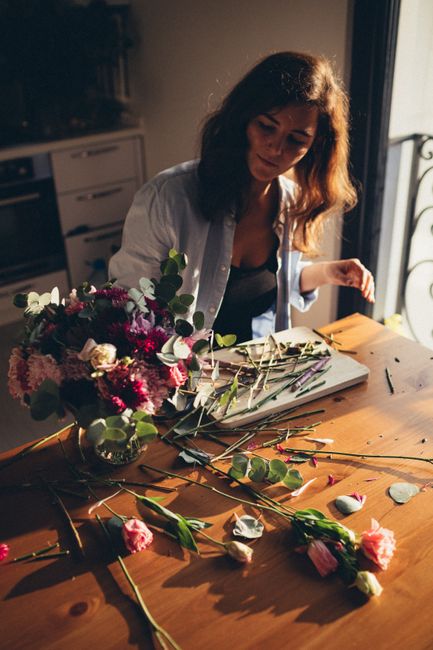
In a DIY setup, the process usually starts with inspiration boards, a budget, and a shortlist of flower types that are available in season. You then need vessels, tools, support materials, transport, and a dry, cool place to store everything. On the day, you or your helpers will need time to condition stems, create arrangements, and place them around the venue without bumping into catering, the registrar, or a wedding party trying to find somewhere to sit. It can be done. It just needs discipline.
With a professional florist, the process is more structured. You share the brief, review proposals or quotes, agree the floral elements, confirm the delivery schedule, and usually discuss mechanics such as buttonholes, bouquets, ceremony pieces, table flowers, and any installation work. If a florist also handles delivery, it matters that timings are clear and realistic; see the practical detail on delivery arrangements if you are comparing what service-level support looks like. The aim is simple: remove surprises on the day.
The most useful way to think about this is as a project, not a shopping trip. Flowers have a lifecycle. They are cut, transported, hydrated, arranged, and displayed under changing conditions. A florist plans for that. DIY couples sometimes find themselves learning that lesson at 9.30 a.m. while holding a pair of scissors and a half-open rose. Not ideal, truth be told.
Key Benefits and Practical Advantages
Both routes have real benefits. The trick is understanding which benefits matter most to your wedding.
Benefits of DIY wedding flowers
- Lower spend on labour: You are mainly paying for materials rather than professional design time.
- Creative control: You can build the exact look you want, stem by stem.
- Personal meaning: Family members or friends can help, which can feel warm and memorable.
- Flexibility: You can adjust details right up to the event if you are organised enough to do so.
Benefits of hiring a florist
- Consistency: Bouquets, table centres, and ceremony flowers feel cohesive rather than pieced together.
- Reliability: Experienced florists know how to handle fragile flowers, transport, and timing.
- Design expertise: They can suggest flowers that hold up better in heat, cold, or a long day.
- Stress reduction: You are not arranging stems the morning of your wedding with a playlist on and people asking where the charger is.
There is also a quality difference that can be hard to describe until you see it. A skilled florist understands balance, spacing, texture, and scale. They know when a design needs height and when it needs softness. That matters more than people realise. A bouquet can be beautiful but still feel wrong if it overwhelms the dress or looks too sparse in photos.
If you care about sustainability, professional support can help there too. A good florist can suggest seasonal blooms, reusable mechanics, and lower-waste design choices. If environmental practice is important to you, it is worth reviewing a supplier's approach to sustainability before you commit. That does not make one option automatically better, but it helps you choose more consciously.
Who This Is For and When It Makes Sense
DIY flowers work best for couples who are hands-on, fairly organised, and comfortable with a bit of unpredictability. If you enjoy practical crafts, have several willing helpers, and your wedding is small or simple, DIY can be a smart and satisfying route. A simple barn wedding with a few statement arrangements and bud vases is a very different beast from a formal ballroom with multiple tables, a ceremony arch, and transport between venues.
Hiring a florist makes more sense when one or more of these apply:
- You have a larger guest list or multiple floral areas to cover.
- Your venue setup window is short.
- You want a specific, polished design.
- You are getting married in a busy season and need dependable supply handling.
- You do not want family and friends working on flowers instead of enjoying the day.
- You have little spare time before the wedding, which is normal, honestly.
There is no shame in choosing support. People sometimes treat hiring a florist like an indulgence, but for many couples it is a practical service purchase. If you are trying to keep the whole wedding experience smooth, the extra help can be worth far more than the flower budget line suggests.
For couples organising weddings alongside everyday life, work, children, or travel, it often becomes a question of bandwidth. You may have the taste and the enthusiasm. What you do not have is a spare Thursday to condition 120 stems. And that is fine.
Step-by-Step Guidance
If you are still undecided, use a simple decision process. It cuts through the emotion and gets you to a practical answer.
- List every floral element. Write down bouquets, buttonholes, table centres, aisle flowers, welcome arrangements, fireplace pieces, and anything else you want.
- Estimate how much time setup will take. Be honest. If you think "two hours," allow more. Weddings have a funny way of eating time.
- Check venue timing and access. Ask when you can enter, where flowers can be stored, and whether there are rules for candles, water, or hanging installations.
- Match the design to your skill level. Simple jars and foliage are not the same as cascading bouquets or large ceremony arches.
- Consider the season. Some flowers are easier to source and hold better at certain times of year.
- Decide who is actually doing the work. If your "DIY plan" depends on four busy relatives arriving early and calmly turning into florists, you may want to rethink it.
- Compare the cost of materials plus time. Cheap flowers can still become expensive once you add containers, tools, extra stems, transport, and last-minute replacements.
- Choose the level of support you really need. Full florist service, partial florist help, or DIY with a few purchased items can all work.
A surprisingly useful exercise is to picture the day itself. What is happening at 8 a.m.? Who is unloading the flowers? Who is pinning buttonholes? Who is checking the bouquets have enough water? If the answers start to feel vague, that usually tells you something.
For many couples, a hybrid approach is the sweet spot: hire a florist for the important pieces and DIY the simpler touches. This can preserve budget without turning the whole morning into a florist training session.
Expert Tips for Better Results
Here are the practical things that make the biggest difference, whether you go DIY, pro, or somewhere in between.
1. Prioritise the visible pieces
The bouquet, ceremony focal point, top table, and guest-facing tables usually matter most in photos and first impressions. If your budget is tight, put the money there first. A few strong arrangements beat lots of weak ones every time.
2. Choose flowers that suit the day, not just the mood board
Some flowers are delicate, some are robust, and some are simply fussy. If your wedding is in summer and the venue gets warm, ask what holds up well. A florist will often steer you toward sensible choices without ruining the look you want.
3. Build in a buffer for transport and setup
Flowers look calm in a cool workroom. They can look dramatically less calm in a car boot. Allow extra time, keep water on hand, and avoid overloading arrangements. It sounds obvious, then the wedding week arrives and all obvious things become slippery.
4. Ask about aftercare
If flowers are being delivered in advance, check how they should be stored and whether anything needs refreshing. For day-after arrangements, a little knowledge goes a long way. Practical care guidance is often worth reading in advance, including basic flower care advice.
5. Keep your design choices coherent
It is easy to fall in love with fifteen separate ideas. Resist that. Choose one or two visual threads, such as soft romantic pastels or structured white-and-green styling, and let everything echo that choice. Simpler is often stronger.
One last tip: if you are nervous, do a tiny test arrangement a few weeks beforehand. Not a full rehearsal, just enough to see how the flowers behave in your hands. It is remarkable how much confidence a small test can give you.
Common Mistakes to Avoid
Wedding flowers go wrong less because of bad taste and more because of avoidable logistics. The most common mistakes are usually practical.
- Underestimating setup time: What looks like a quick arrangement can take longer once stems are stripped, cut, and balanced.
- Buying flowers too late: Availability gets tighter as the date approaches, especially for popular seasonal blooms.
- Ignoring venue conditions: Heat, draughts, low light, and long transport all affect flower life.
- Choosing delicate flowers for an active schedule: Beautiful, yes. Resilient, not always.
- Forgetting tools and consumables: You need scissors, tape, wire, vessels, water picks, ribbon, and a lot of small items that somehow vanish on the day.
- Relying on one person to do everything: That person will probably be you, and you will already be busy.
Another mistake is trying to save money in the wrong place. For example, cutting a florist's design down too much can create more waste and stress than it saves. Equally, going fully DIY for a complex setup may cost more once you factor in rentals, florist foam alternatives, transport, and contingency flowers.
And please, do not leave bouquet assembly to the morning if the rest of the day is tightly scheduled. That is how people end up using kitchen timers, old jam jars, and hope. Lovely in theory. Less lovely in practice.
Tools, Resources and Recommendations
You do not need an entire studio to make wedding flowers work, but you do need the right basics. This is true whether you are making arrangements yourself or helping a florist with simple setup tasks.
Useful DIY tools
- Sharp floral scissors or secateurs
- Clean buckets for hydration
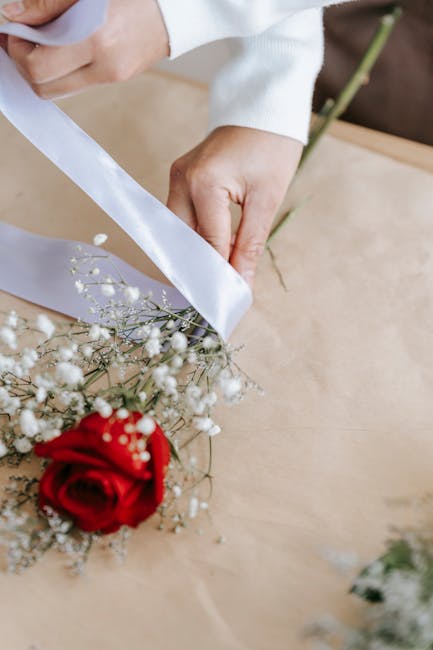
- Ribbon, twine, or wrap for finishing touches
- Floral tape and wire, if needed for simple mechanics
- Vases, jars, or containers sized to your design
- Soft cloths and paper towels for small spill clean-ups
- A cool storage space with enough room to keep arrangements safe
Useful planning resources
- A mood board with real flowers, not only filtered photos
- A room layout from the venue
- A timing schedule for delivery, assembly, and placement
- A list of must-have flowers and nice-to-have extras
- A budget split between core arrangements and optional decorative pieces
If you are comparing suppliers, it also helps to read the details around ordering and payment so there are no surprises later. The pages on payment and returns and refunds can give you a better sense of how a flower retailer handles the practical side of buying. For couples who prefer a straightforward supplier with clear information, that matters as much as the styling.
For more general background about the business and how it presents itself, you can also look at the about us page and contact details if you want to understand who you would be speaking to. It is a small thing, but knowing who is on the other end can make planning feel much easier.
Law, Compliance, Standards, or Best Practice
For wedding flowers, the main compliance concerns are usually practical rather than heavily regulated. That said, sensible best practice still matters. If you are hiring a florist, ask about public liability insurance, delivery arrangements, and whether they are comfortable working within your venue's health and safety rules. Many venues in the UK will have their own setup requirements, particularly for access, floor protection, and the use of ladders or hanging elements.
If you are doing DIY, you still need to think carefully about safety. Water spills can create slip risks, sharp tools need proper handling, and some arrangements can block exits or interfere with catering routes if placed carelessly. Nothing dramatic, just the ordinary stuff that gets overlooked when everyone is focused on the pretty bits.
Best practice also includes being realistic about food proximity, candle placement, and transport. If your venue or registrar has specific rules, follow them. If they ask for setup to finish by a certain time, plan around that rather than hoping to squeeze in "just one more arrangement." Hope is not a logistics plan.
From a buying perspective, it is sensible to review the supplier's public policies, especially if you are ordering items in advance. Useful policy pages such as terms and conditions and the privacy policy help set expectations around ordering, data handling, and responsibilities. It is not glamorous reading, but it is part of buying wisely.
If accessibility matters to members of your wedding party or guests, supplier information should be easy to navigate and understand. A clear accessibility statement is a good sign that the business takes usability seriously. Small things, yes, but they point to wider professionalism.
Options, Methods, or Comparison Table
Here is a practical side-by-side comparison to help you decide which route fits your wedding best.
| Factor | DIY Flowers | Professional Florist |
|---|---|---|
| Upfront cost | Usually lower on labour, but materials and extras can add up | Higher, with design and expertise included |
| Time required | High, especially near the wedding date | Low for the couple, moderate for planning |
| Stress level | Can be high if setup depends on family and friends | Usually lower because the florist carries the operational load |
| Design consistency | Depends on experience and available help | Typically strong and polished |
| Risk of damage or wilting | Higher without proper storage and transport | Lower thanks to professional handling |
| Best for | Smaller weddings, simple arrangements, hands-on couples | Complex styling, larger weddings, tight schedules |
If you are still unsure, use this rule of thumb: the more moving parts your floral plan has, the more likely it is that hiring a florist will save money in time, mistakes, and stress. That does not mean DIY is wrong. It just means complexity has a cost, whether you pay it in cash or in effort.
Case Study or Real-World Example
Consider a couple planning a late-spring wedding in a local country venue. They originally wanted to do everything themselves: bouquets, simple table jars, ceremony flowers, the lot. The budget looked manageable on paper, but once they mapped out the actual work, the picture changed. They had the flowers arriving the day before, a narrow venue access window, and two family members who were happy to help but also had to travel from different parts of the country.
They took a hybrid approach instead. A florist handled the bouquets, buttonholes, and the main ceremony flowers, while the couple used a few simple arrangements and candles for the tables. The result was calmer, more cohesive, and far easier to set up. More importantly, nobody spent the morning running around with scissors and a nervous smile.
What made the difference was not simply spending more. It was identifying the parts where professional expertise mattered most. The big visual elements were handled well, and the couple kept a personal touch in the smaller details. That balance is often the sweet spot.
In a different scenario, a couple with a very small civil ceremony might decide to buy ready-made flowers and place them themselves. That can work too, especially if the ceremony and reception are short, simple, and in one location. The point is to match the method to the event, not to the wedding industry's loudest expectations.
Practical Checklist
Use this checklist to decide whether to DIY or hire a florist.
- Have you listed every floral item you need?
- Do you know your venue access times?
- Have you allowed enough time for setup and transport?
- Are your chosen flowers suitable for the season?
- Do you have the right tools and containers?
- Is there a cool, safe storage space available?
- Who will actually assemble the flowers on the day?
- Do you want a highly polished, cohesive look?
- Would a hybrid approach reduce stress without losing personal style?
- Have you reviewed delivery, payment, and policy details if buying from a supplier?
Quick decision guide: if your answer is "yes" to most of the first five points and "no" to the stress points, DIY may be workable. If the opposite is true, a florist is probably the wiser choice.
And if you are still hovering in the middle, that is completely normal. Plenty of couples do. Weddings are full of decisions that look simple until you actually start making them.
Get a free quote today and see how much you can save.
Conclusion
The DIY vs Pro: When to Hire a Florist for Your Wedding decision comes down to more than budget. It is really a question of time, confidence, scale, and the kind of day you want to have. DIY can be lovely when the flowers are simple, the guest list is smaller, and you genuinely want the hands-on experience. Hiring a florist makes better sense when you want polish, calm, and a design that will hold together without last-minute drama.
The best choice is the one that fits your real life, not your idealised one. If you can do it yourself and enjoy the process, great. If you would rather hand over the pressure and keep your energy for the vows, also great. There is no gold star for making wedding planning harder than it needs to be.
Choose the route that lets you breathe, smile, and actually notice the flowers on the day. That part matters more than people admit.
Frequently Asked Questions
Is DIY cheaper than hiring a wedding florist?
Usually, DIY can be cheaper on labour, but not always cheaper overall. Once you add containers, tools, transport, extra flowers, and the cost of your time, the gap can shrink. For simple weddings, DIY can save money; for more complex ones, a florist may offer better value.
When should I definitely hire a florist for my wedding?
You should strongly consider hiring a florist if your wedding has multiple floral areas, a short setup window, a formal design, or a venue with strict access rules. A florist is also worth it if you simply do not want floral logistics taking over your week.
Can I do some wedding flowers myself and hire a florist for the rest?
Yes, and in many cases that is the smartest option. Couples often hire a florist for bouquets, ceremony pieces, and other key items, then DIY table decorations or smaller accents. It keeps the look cohesive while controlling costs.
What flowers are easiest for DIY wedding arrangements?
In general, sturdier flowers and foliage are easier to work with than delicate, fast-wilting blooms. The best choices depend on the season and venue conditions, so it helps to keep the design simple and choose flowers that travel well.
How far in advance should I book a florist?
It is sensible to book as early as you can, especially for popular wedding dates. Even if you are not ready with all the details, securing the florist early gives you more choice and time to refine the brief later.
What should I ask a florist before booking?
Ask what is included, how delivery works, whether setup is covered, what happens if specific flowers are unavailable, and how payment is handled. It is also sensible to ask about experience with your type of venue and any access restrictions.
What if my venue has limited access for setup?
If access is tight, hiring a florist is often the safer route. Limited access increases the chance of delays and rush jobs, which is exactly what you want to avoid on a wedding day. A florist can usually plan around that more effectively than a DIY team.
How do I make DIY flowers look professional?
Keep the palette focused, use plenty of greenery or one or two main flower types, and avoid overcrowding arrangements. Consistent vessels and careful spacing help a lot. Honestly, restraint is one of the biggest secrets here.
Do wedding flowers need special care before the ceremony?
Yes. Flowers should be kept cool, hydrated, and out of direct sun or heat. They should also be transported carefully and arranged as close to the event as practical. Basic aftercare makes a bigger difference than many people expect.
How do I know if I am overcomplicating my flower plan?
If your floral plan depends on a lot of separate tasks, several helpers, and a long setup window, it may be more complicated than it needs to be. A good test is whether you could explain the whole process in two minutes without sounding tired. If not, simplify.
Can a florist help if I only want a few key arrangements?
Yes. Many couples hire a florist for the most visible elements and keep the rest minimal. That approach often gives you the biggest impact for the least stress, especially if the venue already has strong character.
What is the biggest mistake couples make with wedding flowers?
The biggest mistake is underestimating the logistics. Flowers are not just decor; they are a timed, perishable, hands-on part of the day. Once you treat them that way, the planning gets much easier.