Avoid These Common Mistakes When Ordering Funeral Flowers
Ordering funeral flowers is one of those tasks that sounds simple until you're actually doing it. You want the arrangement to feel respectful, appropriate, and on time, but there are a few easy mistakes that can turn a thoughtful gesture into an awkward one. If you are trying to avoid these common mistakes when ordering funeral flowers, you are in the right place.
Truth be told, most mistakes happen because people are already dealing with grief, time pressure, or distance. That is completely understandable. Still, a little guidance goes a long way. In this article, we'll walk through what funeral flowers are meant to do, how the ordering process works, where people commonly go wrong, and how to choose something that genuinely fits the occasion. We'll also cover etiquette, practical checks, and a simple checklist you can use before you place the order.
Let's make this easier.
Why Avoid These Common Mistakes When Ordering Funeral Flowers Matters
Funeral flowers do more than fill a space. They help express sympathy when words feel clumsy or not enough. They also carry meaning for the family, the service, and sometimes the person arranging them. A well-chosen tribute can feel calm, warm, and deeply considered. A badly planned one can feel impersonal, late, or simply out of step with the occasion.
That matters because funerals already carry a lot of emotional weight. A mistake with the flowers may seem small from the outside, but at the service it can become very noticeable. Wrong delivery details, unsuitable wording on the card, or a tribute that does not match the family's wishes can cause avoidable stress at a difficult moment. And nobody needs extra stress on a day like that.
There is also a practical side. Funeral flowers often need to be delivered within a tight window, sometimes to a funeral home, crematorium, church, cemetery, or private address. If you miss the cut-off, choose the wrong size, or forget to check any restrictions, the flowers may not reach the right place at the right time. In a setting where timing and tone both matter, those details count.
In our experience, the people who feel most confident are the ones who pause for a minute and ask: who are these flowers for, where are they going, and what would feel respectful here? That simple check avoids more problems than you might expect.
How Avoid These Common Mistakes When Ordering Funeral Flowers Works
Ordering funeral flowers works best when you treat it as a small planning task rather than a quick impulse purchase. Start with the basic facts: the date and time of the service, the venue, the name of the deceased, and any guidance from the family or funeral director. Then decide what role the flowers should play. Are they from close family, from a group of colleagues, or from a friend sending sympathy from afar?
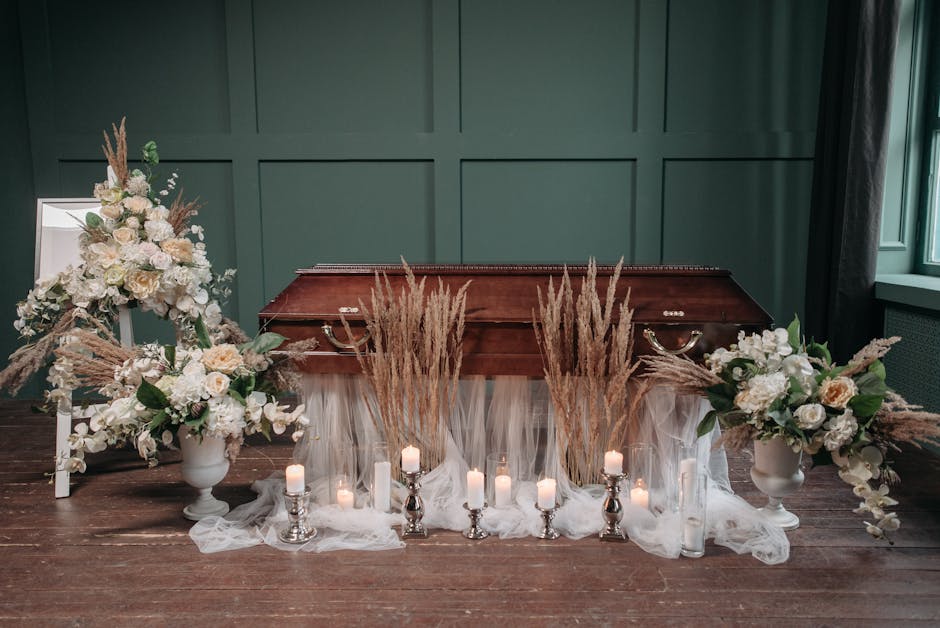
Once that is clear, the rest becomes much simpler. Funeral flowers usually fall into a few broad categories: wreaths, sprays, sheaves, letter tributes, casket sprays, posies, and sympathy bouquets. Each has a different feel and is suited to different relationships and service types. A florist can often help you choose, but only if you give them enough detail.
The real process usually looks like this:
- Choose the type of tribute that suits your relationship to the person or family.
- Check the funeral details, especially venue, time, and delivery instructions.
- Pick colours and flowers that fit the tone, season, and any family preferences.
- Write a clear, thoughtful card message.
- Confirm the delivery date, cut-off time, and any naming details required.
- Review the order before paying, then keep the confirmation safely.
That might sound obvious, but the mistakes happen when one of those steps gets rushed. The flowers themselves are only part of it; the coordination around them is where most problems start.
Key Benefits and Practical Advantages
Taking the time to avoid common ordering errors gives you more than just peace of mind. It helps the flowers do their real job, which is to show care in a way that feels dignified and appropriate. Here are the main benefits people usually notice.
- Better timing: flowers arrive when they should, rather than after the service has started or finished.
- More appropriate presentation: the tribute fits the relationship, culture, and tone of the day.
- Less emotional friction: families are not left sorting out a mix-up or a last-minute problem.
- Clearer communication: the florist, venue, and family all know what to expect.
- Stronger personal meaning: the choice feels deliberate, not generic.
There is another advantage that often gets overlooked: when the arrangement is well chosen, people remember the gesture for the right reason. They notice the thought behind it. A simple white spray, a favourite flower, or a carefully worded card can say more than a grand arrangement with no sense of context. Small details, honestly, carry a lot.
Who This Is For and When It Makes Sense
This guidance is for anyone ordering sympathy flowers, whether it is your first time or you have done it before but want to avoid a repeat of a slightly awkward experience. It is especially useful if you are:
- sending flowers to a funeral or memorial service
- ordering on behalf of family members or work colleagues
- trying to choose between different tributes and arrangements
- unsure about the correct wording for a sympathy card
- ordering from a distance and cannot check the venue in person
- working to a tight deadline, which, let's face it, is often how these things happen
It also makes sense if you are simply not familiar with funeral flower etiquette. That is normal. Most people do not order funeral flowers regularly. A bit of context can prevent a very ordinary mistake, like choosing something too cheerful, too casual, or too large for the setting.
If you are arranging a tribute for a religious service, a crematorium, a burial, or a home wake, the practical details may vary. The general principle stays the same: match the tribute to the occasion, the venue, and the wishes of the family.
Step-by-Step Guidance
Here is a straightforward way to order funeral flowers without missing anything important.
1. Confirm the service details
Before you look at flower styles, check the basics. You need the service date, time, venue, and the name to be used on the order. If you are unsure whether the flowers should go to a funeral home, church, crematorium, or family home, ask rather than guessing. Guessing is how arrangements end up waiting at the wrong place. Not ideal.
2. Decide who the flowers are from
The relationship matters. A partner, close family member, friend, neighbour, colleague group, or business client may each call for a different style and message. A family spray from immediate relatives will usually look and feel different from a corporate tribute or a simple bouquet of sympathy flowers.
3. Choose an appropriate tribute style
Think about whether you need a wreath, coffin spray, letter tribute, posy, sheaf, basket, or vase arrangement. If you are ordering for a service, some tributes are more traditional and formal. If the flowers are going to the family home after the funeral, a softer sympathy bouquet may be more suitable.
4. Pick colours and flowers with care
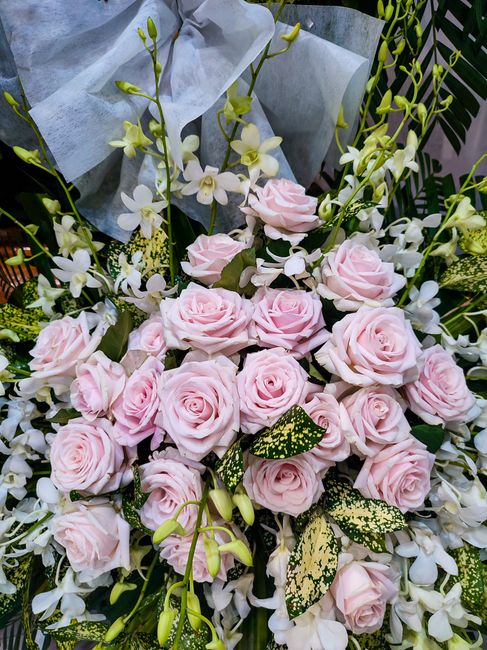
White is often chosen for its calm, classic feel, but it is not the only option. Soft pinks, creams, purples, blues, and gentle mixed arrangements can all be appropriate depending on the person and the family's taste. If the deceased had a favourite flower or colour, that can add a lovely personal touch. You do not need a dramatic arrangement to make it meaningful.
5. Write a clear card message
Keep it brief, sincere, and readable. This is not the time for anything overly elaborate. A simple message such as "With deepest sympathy" or "Thinking of you at this sad time" is often enough. If you are close to the family, you can add a short personal memory. Avoid jokes, nicknames that may confuse people, or messages that are too vague to feel real.
6. Check spelling and names carefully
Funeral flowers often include names, initials, or tribute words. One spelling error can be awkward, especially on a letter tribute or ribbon. Take a breath and read everything once more before confirming. Then read it again. It takes thirty seconds and saves a headache later.
7. Confirm delivery and timing
Double-check the delivery address, contact number, and deadline. Some venues have strict access rules or set receiving hours. A good florist will know to ask, but it helps if you already have the information to hand. If you are ordering close to the day, confirm cut-off times before payment.
8. Keep the confirmation and follow up if needed
Save the receipt or order confirmation. If the service details change, you will want the order information nearby. That tiny bit of admin can matter more than people expect, especially when plans shift at short notice.
Expert Tips for Better Results
Here are some practical tips that experienced florists and careful customers tend to follow.
- Ask what the venue allows. Some locations have limited space or specific delivery points.
- Keep the message simple. A short sincere line usually works better than trying too hard.
- Use the person's preferences where appropriate. Favourite flowers or colours can make a tribute feel personal without overcomplicating things.
- Think about size. Bigger is not automatically better. At a small chapel or intimate gathering, an oversized arrangement can feel out of place.
- Choose flowers with staying power if needed. If the tribute will be displayed for a while, sturdier blooms may be more practical.
- Order early when you can. Same-day ordering is sometimes possible, but early planning leaves more room for accuracy.
A small but useful detail: if several people are contributing together, agree on one point of contact. Otherwise you end up with three people assuming someone else has written the card. Happens all the time, rather more than you'd think.
Common Mistakes to Avoid
This is the section that tends to save people the most trouble. The mistakes below are common, avoidable, and often made in good faith.
1. Ordering the wrong type of tribute
A funeral wreath, coffin spray, and sympathy bouquet are not interchangeable. Each serves a different purpose. Ordering the wrong style can make a tribute feel mismatched, even if the flowers themselves are beautiful.
2. Ignoring the family's wishes
Some families request donations instead of flowers, or prefer a very specific style. If those wishes are known, follow them. That is one of the clearest signs of respect.
3. Missing delivery details
Wrong venue, wrong time, no access instructions, no recipient name - any of these can cause a delivery problem. Funeral logistics are not always straightforward, and the florist can only deliver what they can actually find.
4. Writing an overcomplicated card message
Keep it clean and sincere. Long messages can feel heavy or awkward, especially when people are reading them in a quiet, emotional setting.
5. Choosing flowers that feel too bright or celebratory
There is nothing wrong with colour, but very lively arrangements can feel out of step with the tone of a funeral unless the family has asked for them. Think gentle, calming, and respectful.
6. Leaving it too late
Late ordering narrows your options and increases the chance of mistakes. Same-day delivery may be available in some cases, but that should be a backup plan, not the default.
7. Forgetting spelling and names
This one is simple, but it happens. Check the deceased's name, the family name, ribbon text, and card message line by line. It is a small task with a big payoff.
8. Over-ordering size and spending more than necessary
Some people feel pressure to make the arrangement as large as possible. But a tasteful tribute chosen with care is usually more meaningful than an oversized one ordered in a rush.
9. Assuming one florist style fits every setting
What works in a large chapel may not suit a small crematorium or a private memorial. Venue context matters more than people think.
10. Not checking whether flowers can be accepted at all
In some cases, the family may ask for no flowers. If that is the case, you should respect it and consider a sympathy card, donation, or another appropriate gesture instead.
Tools, Resources and Recommendations
You do not need specialised equipment to order funeral flowers well, but a few practical tools help.
- Phone notes or a checklist: useful for writing down names, times, and delivery details.
- Order confirmation email: keep this handy in case anything changes.
- Reference photos of arrangement styles: helpful if you are unsure what a wreath, spray, or sheaf actually looks like.
- A short list of preferred flowers or colours: useful when you want to personalise the tribute.
- Venue details from the funeral director or family: the most important resource of all, really.
If you are exploring flower options further, it can also help to read about broader arrangement types and flower care on the site. For example, if you are planning a wider floral order or comparing styles for another occasion, you may find useful background in the page on wedding flowers in London or the information on about us to understand the kind of service and approach offered. Those pages are not about funerals, of course, but they can still help you get a feel for the florist's style and standards.
Sometimes the most useful resource is simply a calm conversation with the florist. A good one will not rush you. They will ask practical questions, suggest suitable options, and help you avoid the obvious pitfalls without making the process feel formal or cold.
Law, Compliance, Standards, or Best Practice
Funeral flower ordering is not usually a heavily regulated activity for the customer, but there are still standards and expectations worth keeping in mind. The most important ones are practical and ethical rather than legal.
First, respect any family instructions. If the funeral notice says no flowers, or requests donations instead, that preference should be followed. Second, make sure your order details are accurate so the florist can deliver safely and on time. Third, if the arrangement is going to a venue, be aware that the site may have its own access rules, timings, or space limits. These are normal operational considerations, not red tape, but they matter.
Best practice also means being clear about who the flowers are from. If the tribute is from a company, colleagues, club, or extended family, the wording should be appropriate and unambiguous. That is especially true for wreath ribbons, letter tributes, and large shared arrangements.
In the UK, funeral customs can vary a little by faith, region, and family preference. There is no single universal rule for every service. So, if you are unsure, ask the funeral director or the family's nominated contact. A quick check is better than making assumptions. Always.
Options, Methods, or Comparison Table
If you are unsure what to order, it helps to compare the most common funeral flower choices side by side. The right option usually depends on your relationship to the deceased, the setting, and whether the flowers are for the service or for the family afterwards.
| Option | Best for | Typical feel | Common mistake to avoid |
|---|---|---|---|
| Wreath | Formal funeral tributes | Traditional, respectful, symbolic | Choosing it when a more personal tribute would be better |
| Coffin spray | Immediate family | Prominent, central, often larger | Ordering it without checking if it is already covered |
| Posy or bouquet | Friends, neighbours, sympathy sending | Gentle, personal, versatile | Making it too informal for the service |
| Sheaf | Simple, elegant tribute | Natural, understated | Forgetting it may suit some venues better than others |
| Letter tribute | Family names, initials, or short words | Personal, clear, highly visible | Spelling the name incorrectly, which is a painful one |
A quick comparison like this can save a lot of second-guessing. If you are still torn, ask yourself one simple question: does this choice feel respectful without trying too hard? That usually points you in the right direction.
Case Study or Real-World Example
Here is a very typical example. A group of colleagues wanted to send funeral flowers for a teammate's father. They knew the service was on a Friday morning, but they were not sure whether to send a wreath, bouquet, or sympathy spray. One person assumed another had the venue details. Another thought the flowers were going to the family home, not the crematorium. You can probably see where this is heading.
When they paused and checked, they realised the venue had a specific delivery window and the family had asked for subdued, elegant flowers rather than something large or brightly coloured. They chose a simple sympathy spray with a short card message from the team. The florist delivered on time, the wording was correct, and the tribute felt appropriate for the setting.
The lesson is not that people should know every detail. Most people don't. The lesson is that a few careful questions at the start prevent avoidable confusion later. Small things, right? But they matter a lot on a day like that.
Practical Checklist
Use this quick checklist before you place the order.
- Have I confirmed the funeral or memorial date, time, and venue?
- Do I know who the flowers are from?
- Have I checked whether the family wants flowers at all?
- Have I chosen the right tribute type for the occasion?
- Does the colour palette feel respectful and appropriate?
- Have I checked the spelling of names and ribbon text?
- Is the card message short, clear, and sincere?
- Have I confirmed the delivery deadline and address?
- Have I saved the order confirmation?
- Have I asked the florist any questions that still feel unclear?
If you can tick all of those off, you are in good shape. Not perfect, maybe, but properly prepared. And that is usually enough.
Get a free quote today and see how much you can save.
Conclusion
When you order funeral flowers, the goal is not to make the biggest statement. It is to make the right one. That means choosing a suitable tribute, checking the practical details, respecting the family's wishes, and keeping the message simple and sincere. Once you know the common mistakes, the whole process becomes less stressful and much more manageable.
If you are planning ahead, take a moment to review the service details, compare your options, and confirm the delivery information before you pay. If you are ordering at short notice, focus on the essentials: timing, spelling, tone, and appropriateness. That combination usually does the job well.
And if you still feel a bit unsure, that is completely normal. These moments ask a lot of people. A thoughtful arrangement, chosen with care, can bring real comfort. Quietly, gently, it does more than people sometimes realise.
Frequently Asked Questions
What are the most common mistakes when ordering funeral flowers?
The biggest mistakes are choosing the wrong type of tribute, missing the delivery details, writing an awkward card message, ignoring the family's wishes, and leaving the order too late. Spelling errors are also very common. A quick final check prevents most of these problems.
How far in advance should I order funeral flowers?
As early as possible is best, especially if the service is on a fixed date and time. Some florists can help with short-notice or same-day orders, but early ordering gives you more choice and reduces the chance of mistakes.
What should I write on a funeral flower card?
Keep it short, sincere, and respectful. Simple phrases like "With deepest sympathy" or "Thinking of you at this sad time" are perfectly appropriate. If you were close to the person, a brief personal note can be lovely, but avoid anything too long or complicated.
Should funeral flowers be white?
Not necessarily. White is a classic choice because it feels calm and respectful, but soft pinks, creams, purples, blues, and mixed arrangements can also be suitable. The right choice depends on the person, the family's wishes, and the tone of the service.
What type of funeral flowers should I choose if I'm a friend?
Friends often choose sympathy bouquets, posies, sheaves, or smaller tribute arrangements. The best option depends on how close you were and whether the flowers are going to the service or to the family home afterwards.
Can I send funeral flowers to the family home instead of the service?
Yes, you usually can. A sympathy bouquet or vase arrangement is often appropriate for the family home. Just make sure the address is correct and that the family is happy to receive flowers there.
What if the family has asked for no flowers?
In that case, respect the request. You could send a sympathy card, make a donation if appropriate, or offer practical support instead. Following the family's wishes is one of the most respectful things you can do.
How do I avoid spelling mistakes on funeral flower ribbons?
Type the name carefully, then check it again letter by letter before confirming the order. It helps to compare it against the funeral notice or a trusted message from the family. Ribbons and letter tributes leave very little room for errors, so it is worth slowing down.
Is it okay to send bright flowers for a funeral?
Sometimes, yes, but only if it suits the person's personality or the family has asked for a particular style. In most cases, softer and more restrained colours are the safer choice. If you are unsure, ask the florist for guidance.
What is the difference between a wreath and a spray?
A wreath is a circular tribute often used in formal funeral settings. A spray is usually arranged to lie flat and is commonly used on top of a coffin. They serve different purposes, so it is important not to treat them as interchangeable.
How do I know if my funeral flowers will be delivered on time?
Check the florist's delivery cut-off time, confirm the full venue address, and make sure the service details are accurate. If the funeral is at a crematorium, church, or funeral home, ask whether there are special delivery instructions. The clearer the information, the better the chance of a smooth delivery.
Can I personalise funeral flowers with the person's favourite blooms?
Yes, and that can be a very touching choice. A favourite flower or colour adds a personal note without needing to be overdone. It works especially well when you know the person's preferences and want the tribute to feel considered rather than generic.